
1. Start With Decluttering Before You Buy Anything
One of the biggest mistakes people make when it comes to pantry organization is purchasing organizing products before evaluating what they actually own.
We get it. The clear containers, matching baskets, and beautifully labeled jars are tempting. But buying products before understanding your inventory often leads to wasted money and storage solutions that don’t fit your needs.
Before purchasing anything, remove everything from your pantry and sort items into categories.
Check expiration dates, discard expired food, and set aside unopened, unexpired items your household won’t use for donation, where accepted.
As you’re sorting, pay attention to how much of each category you have.
Do you have 15 bags of snacks? Multiple boxes of cereal? More canned goods than you realized?
Understanding your inventory is the foundation of an effective organizing system.
Our professional organizing tip: Don’t organize around what you wish your pantry looked like. Organize around what your household actually buys, eats, and uses.
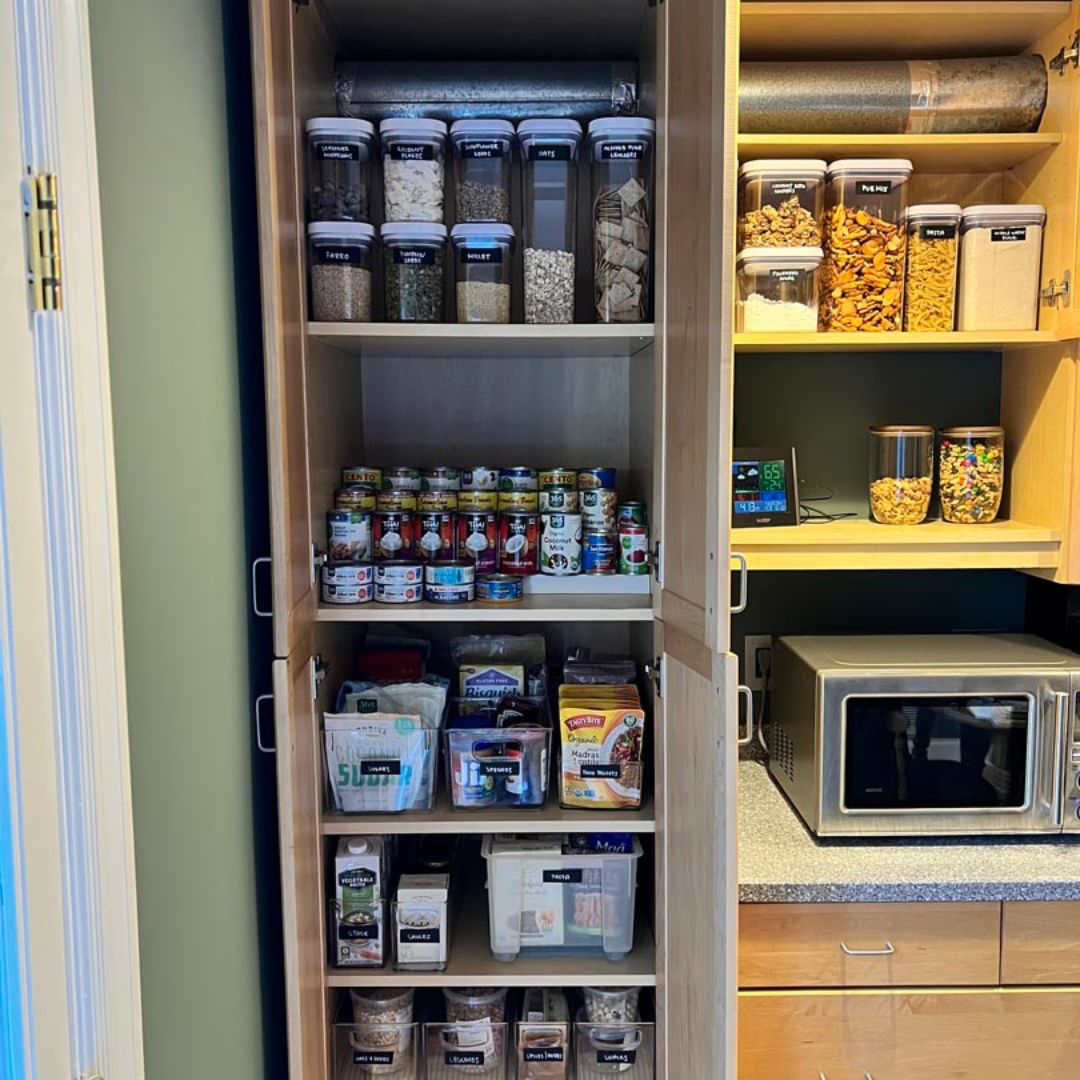
2. Create Zones Based on How Your Household Uses the Pantry
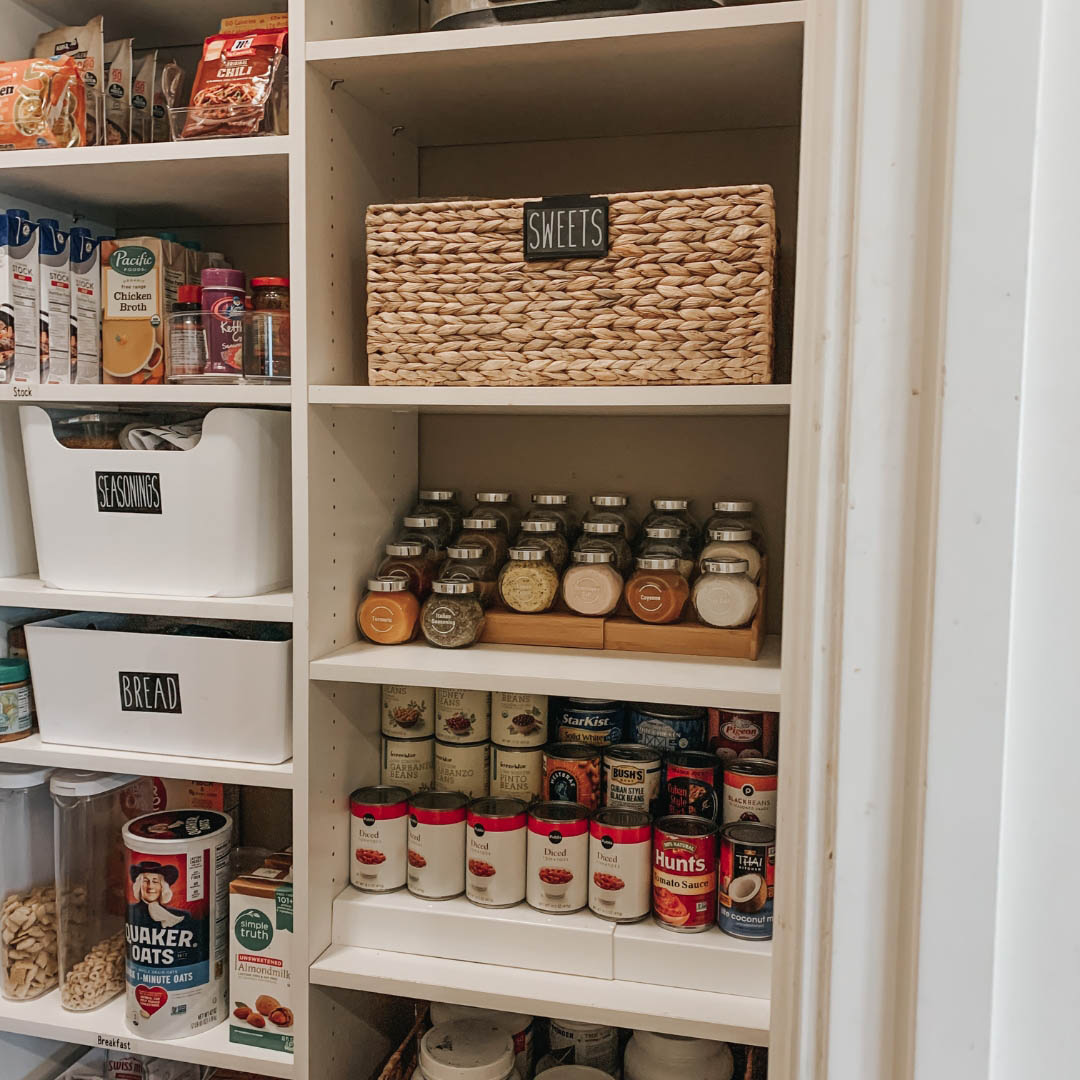
Every item in your pantry should have a designated home.
Without clearly defined zones, food tends to get placed wherever there’s an empty spot. Over time, that creates the same clutter you worked so hard to eliminate.
Instead, divide your pantry into categories based on your household’s habits.
Some common pantry zones include:
- Breakfast foods
- Snacks and grab-and-go items
- Baking supplies
- Canned goods
- Pasta, rice, and grains
- Oils, sauces, and condiments
- Backstock and bulk purchases
Keep frequently used items at eye level or within easy reach. Less frequently used products can live on higher shelves.
If you have children, consider placing their approved snacks on lower shelves so they can access them independently.
Why it works: When everyone knows where things belong, putting groceries away becomes easier, and maintaining the system requires less effort.
3. Use Clear Bins to Keep Categories Contained
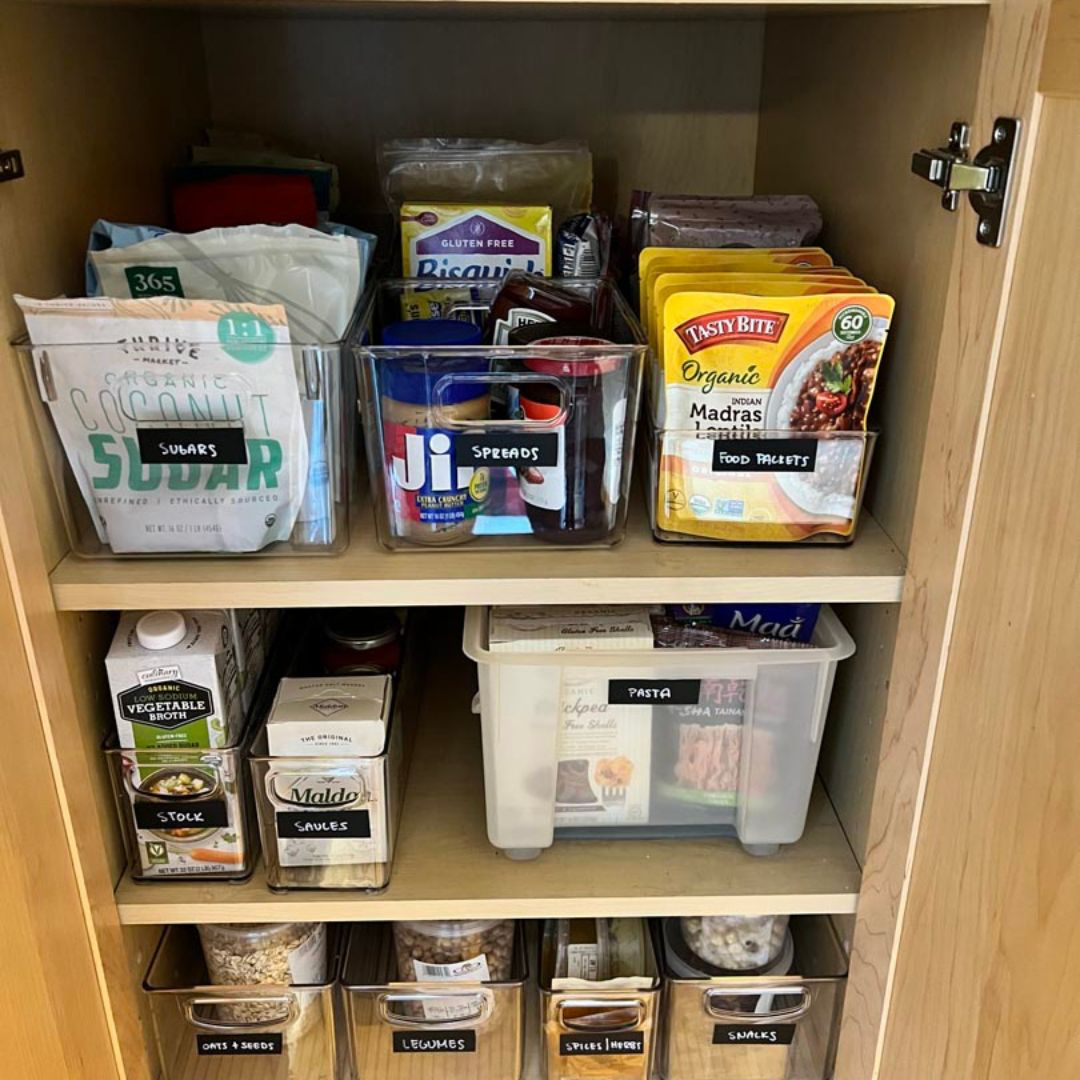
Clear bins are one of our favorite organizing products because they provide visibility while creating boundaries.
Rather than allowing snack bags, seasoning packets, or individually packaged foods to spread across shelves, group similar items into designated containers.
For example, you might have separate bins for granola bars, chips, fruit snacks, and oatmeal packets.
Clear containers allow you to see what’s available without digging through everything.
They also make it easier to identify when you’re running low on something.
But here’s something we always emphasize: Not everything needs its own bin.
Sometimes, grouping two related categories together makes more sense than creating an overly complicated system.
The goal is to make your pantry easier to use, not harder to maintain.
4. Incorporate Turntables for Hard-to-Reach Items
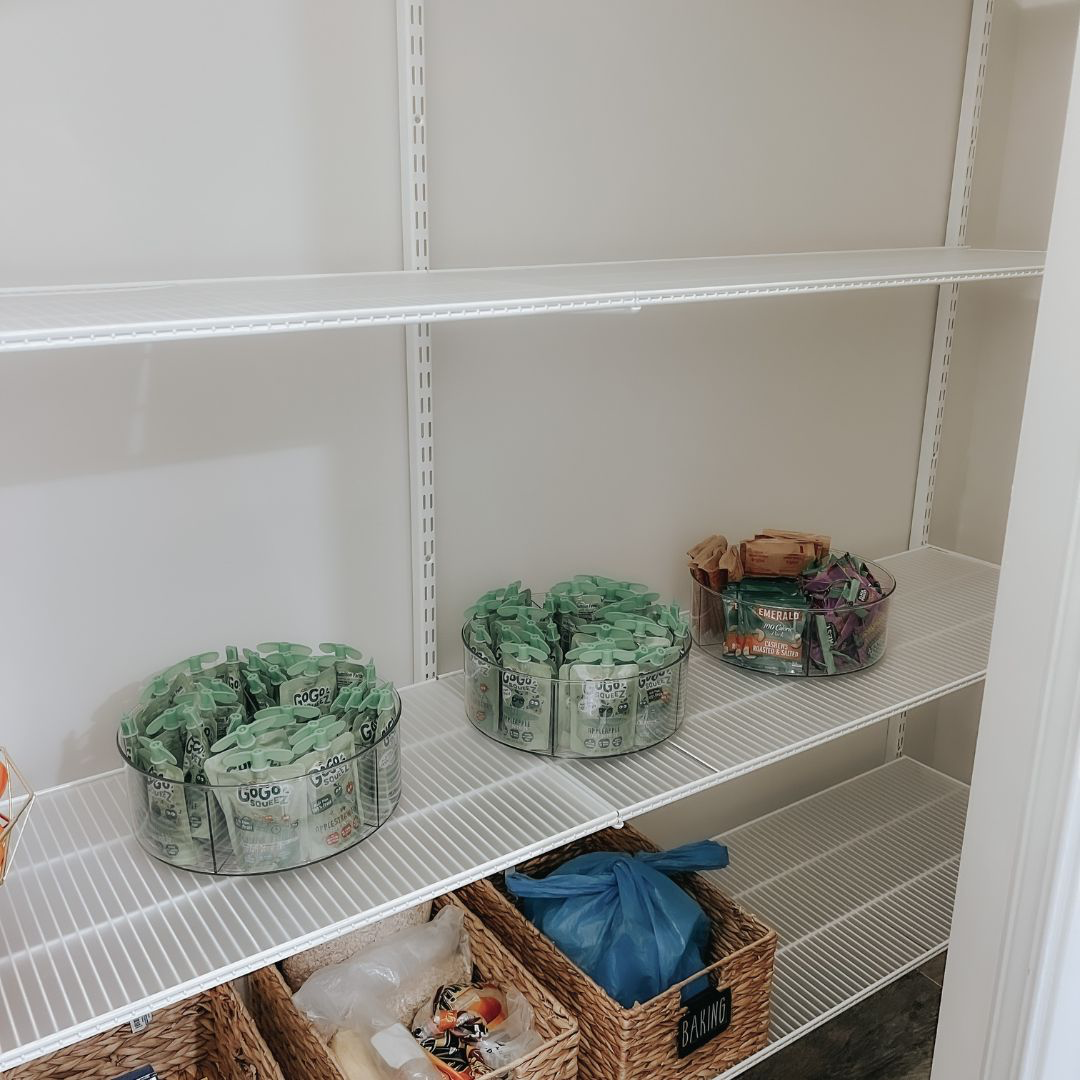
If you’ve ever knocked over three bottles trying to reach one in the back of your pantry, you already understand why we love turntables.
Also called lazy Susans, these rotating organizers are especially useful for:
- Cooking oils
- Vinegars
- Sauces
- Nut butters
- Spreads
- Small condiments
- Small snacks
Instead of moving several products out of the way, simply rotate the turntable to access what you need.
They’re especially helpful in pantry corners and on deeper shelves where items can easily become forgotten.
Our professional organizing tip: Measure your shelf depth and height before purchasing a turntable. Make sure there’s enough clearance for both the organizer and your tallest bottles.
5. Use Stackable Storage to Maximize Vertical Space
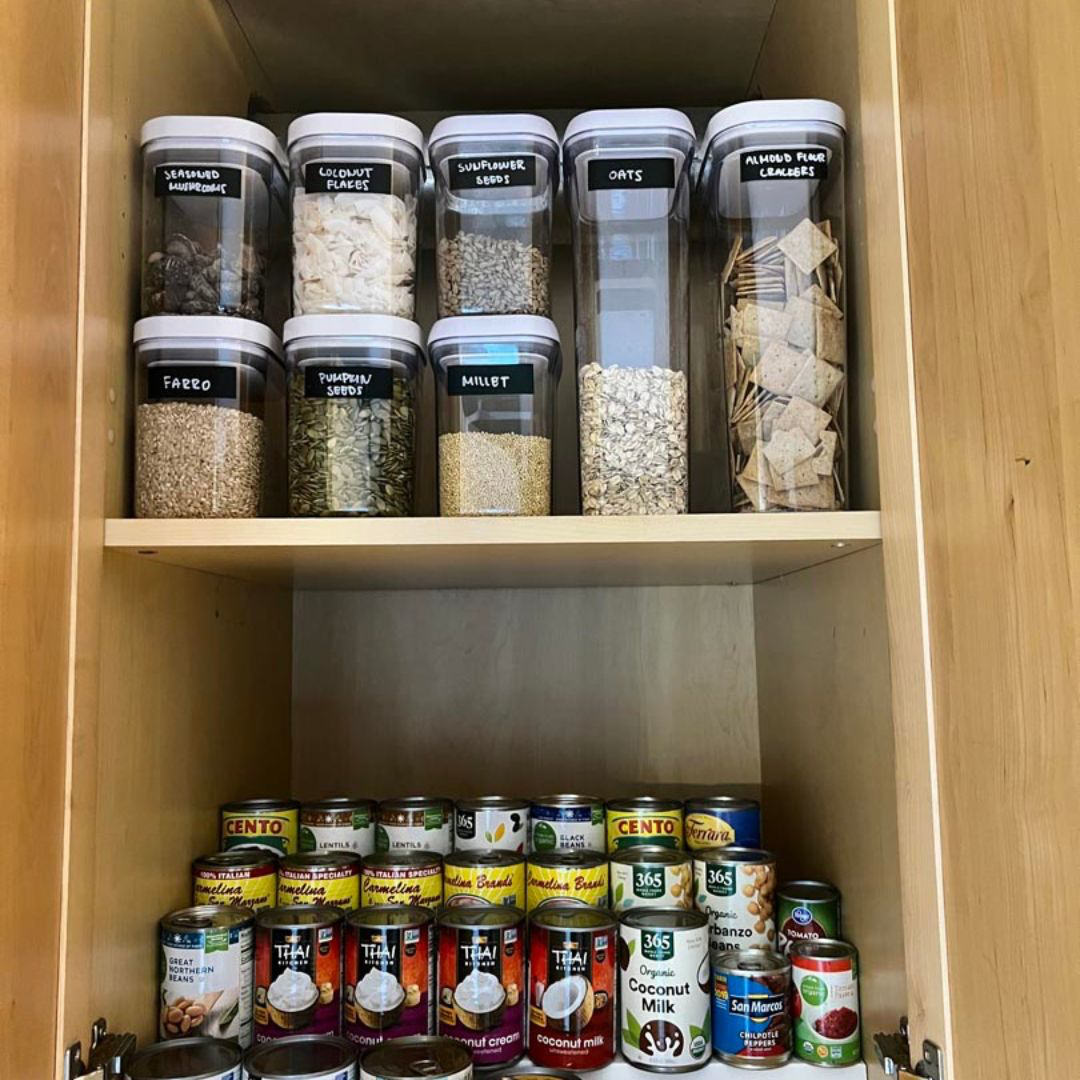
One of the most overlooked pantry organization opportunities is vertical space.
Many pantries have tall shelves, but homeowners only use the bottom portion of each shelf.
That leaves valuable storage space unused.
Stackable bins, shelf risers, and tiered organizers can help maximize available space without requiring additional cabinetry.
Shelf risers are especially helpful for canned goods and smaller containers because they allow you to see products that would otherwise be hidden behind one another.
Stackable bins can work well for individually packaged snacks or backstock items.
However, be mindful of accessibility.
Just because you can stack something doesn’t mean you should.
If accessing a frequently used item requires moving multiple containers, the system may become frustrating over time.
6. Decant Strategically, Not Excessively
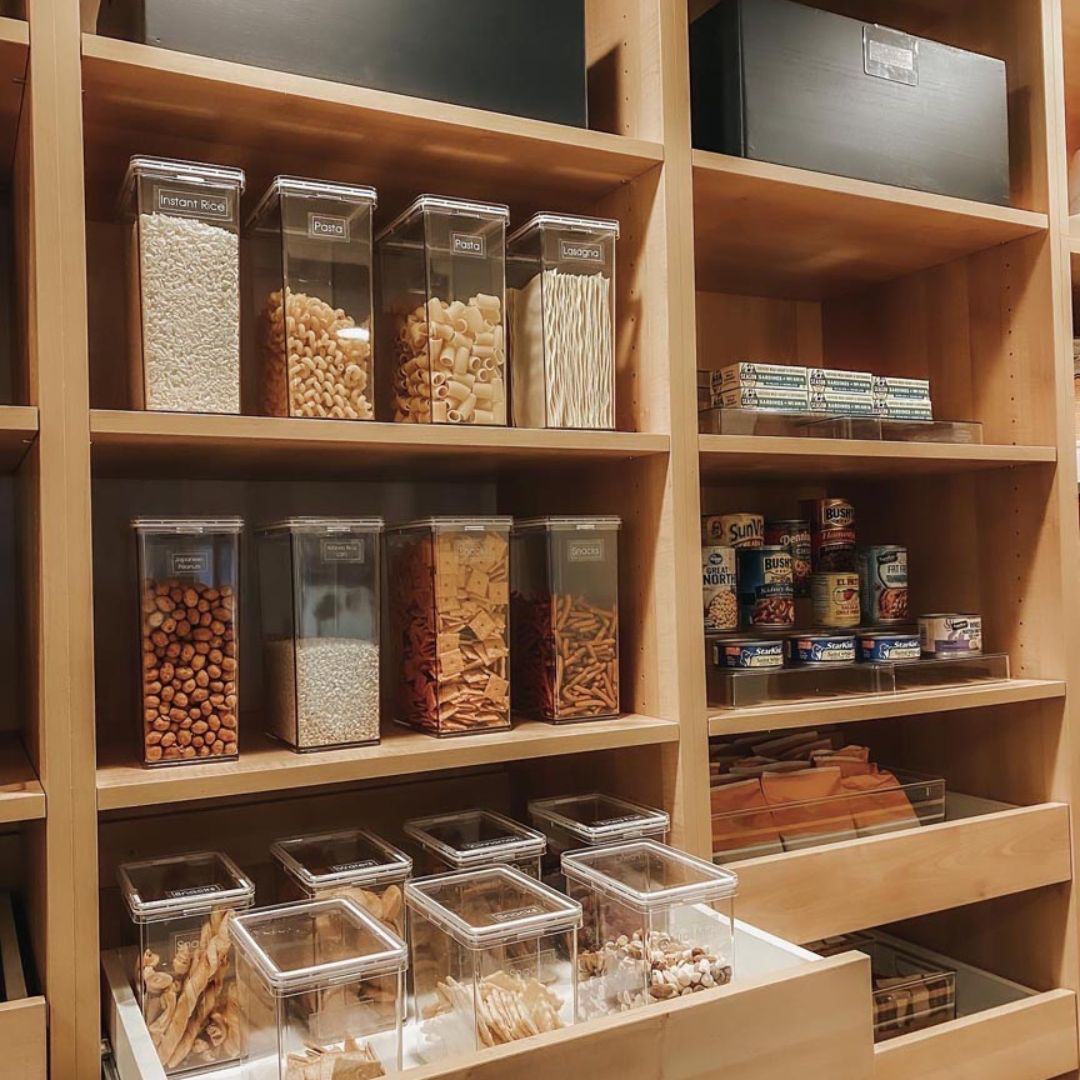
Let’s talk about decanting.
Decanting is the process of transferring food from its original packaging into separate storage containers.
It’s one of the most recognizable elements of a beautifully organized pantry, but it’s not always necessary.
We typically recommend decanting products that your household purchases consistently, such as flour, sugar, rice, pasta, or cereal.
Airtight containers can help protect appropriate dry goods from moisture and make it easier to see how much you have remaining.
However, decanting everything can create unnecessary work.
For example, transferring every individually packaged snack into a separate container may not be worth the extra effort.
And when choosing containers, make sure they accommodate the quantities you normally purchase.
There’s nothing more frustrating than pouring a new bag of rice into a container only to discover that half the bag won’t fit.
Our professional organizing tip: Keep expiration dates, preparation instructions, and important allergen information accessible when removing original packaging.
Remember, decanting is optional. A pantry can be beautifully organized without a single matching food storage container.
7. Create a Designated Backstock Zone
If your household purchases groceries in bulk or stocks up during sales, a backstock zone can make a tremendous difference.
Backstock refers to extra products that aren’t currently needed in your primary pantry areas.
For example, you might have one open box of crackers in your snack zone and three unopened boxes stored elsewhere.
Without a designated backstock area, duplicates often become scattered throughout the pantry.
This makes it harder to track inventory and increases the likelihood of purchasing items you already own.
Instead, designate a specific shelf, basket, or section for overflow products.
Whenever you run out of something in your primary zone, check your backstock before adding it to your grocery list.
This is particularly helpful for larger families and households that shop at warehouse stores.
Why it works: You can take advantage of bulk purchasing without allowing excess inventory to overwhelm your everyday storage.
8. Use Labels to Make Your System Easy for Everyone
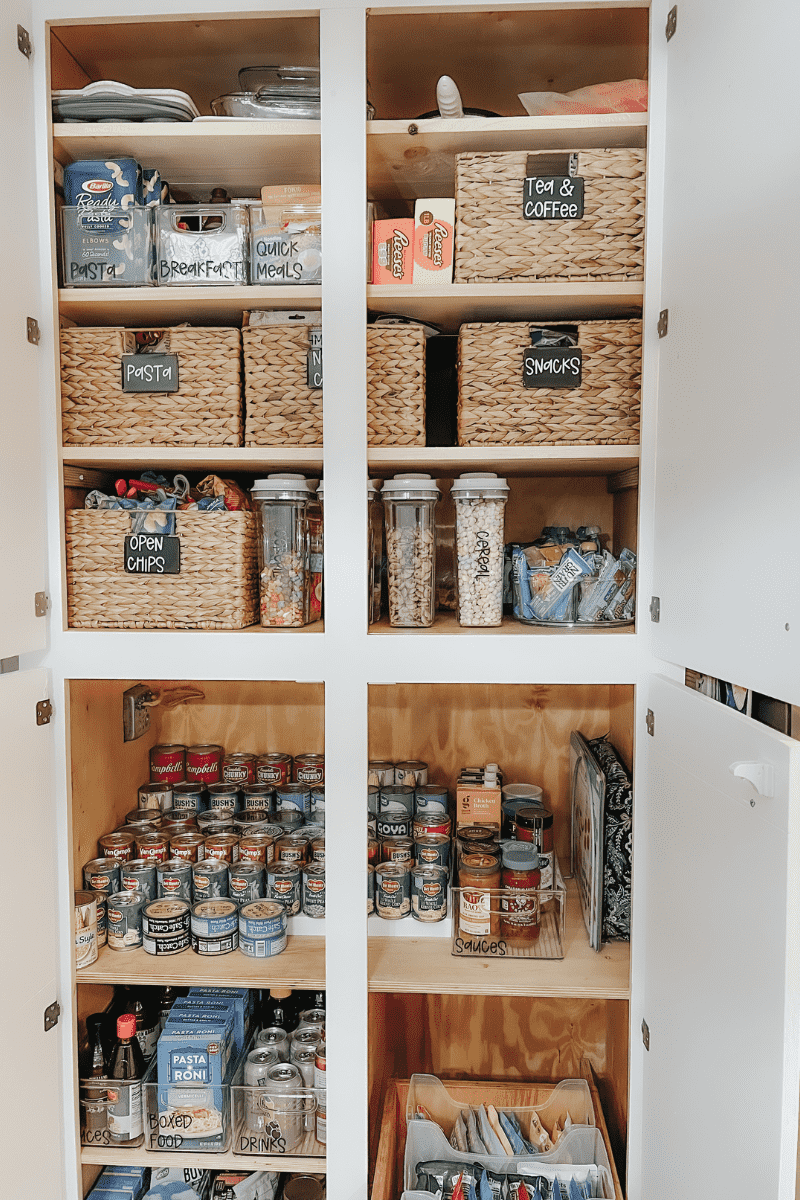
Labels aren’t just decorative. They’re communication tools.
A well-labeled pantry makes it easier for everyone in your household to understand where things belong.
This is especially important when multiple people are responsible for cooking, grocery shopping, or putting food away.
Labels also help reinforce the boundaries you’ve created.
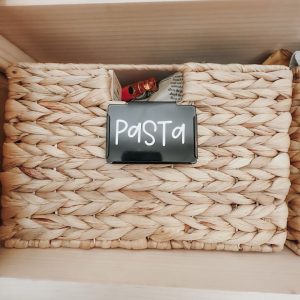
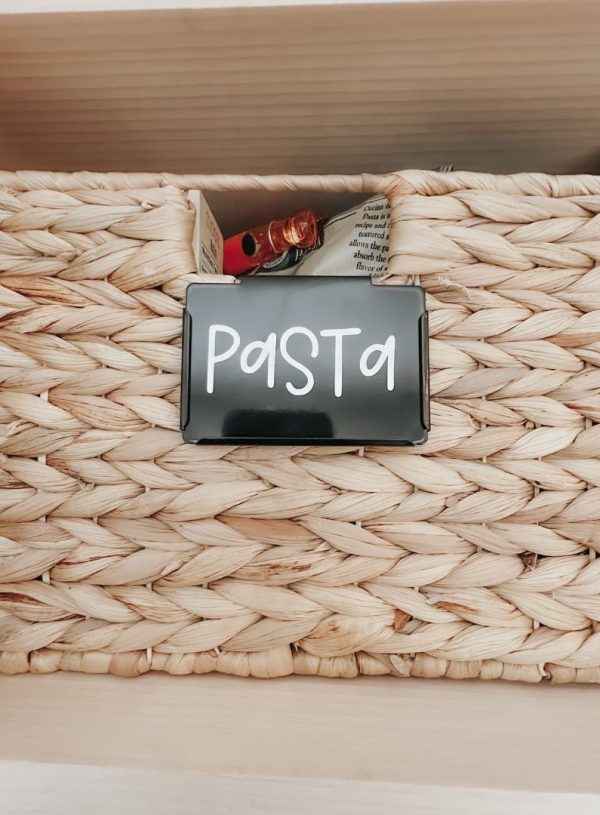
For example, when a basket is labeled “Breakfast,” it communicates exactly what belongs inside.
At Tidied by K, we love incorporating labels because they add the finishing touch to an organized space while supporting long-term maintenance.
That said, you don’t need to label every individual item.
Focus on labeling containers and zones where the category might not be immediately obvious.
For a cohesive appearance, use consistent fonts, label sizes, and placement throughout your pantry.
9. Choose Organizing Products That Complement Your Pantry’s Design
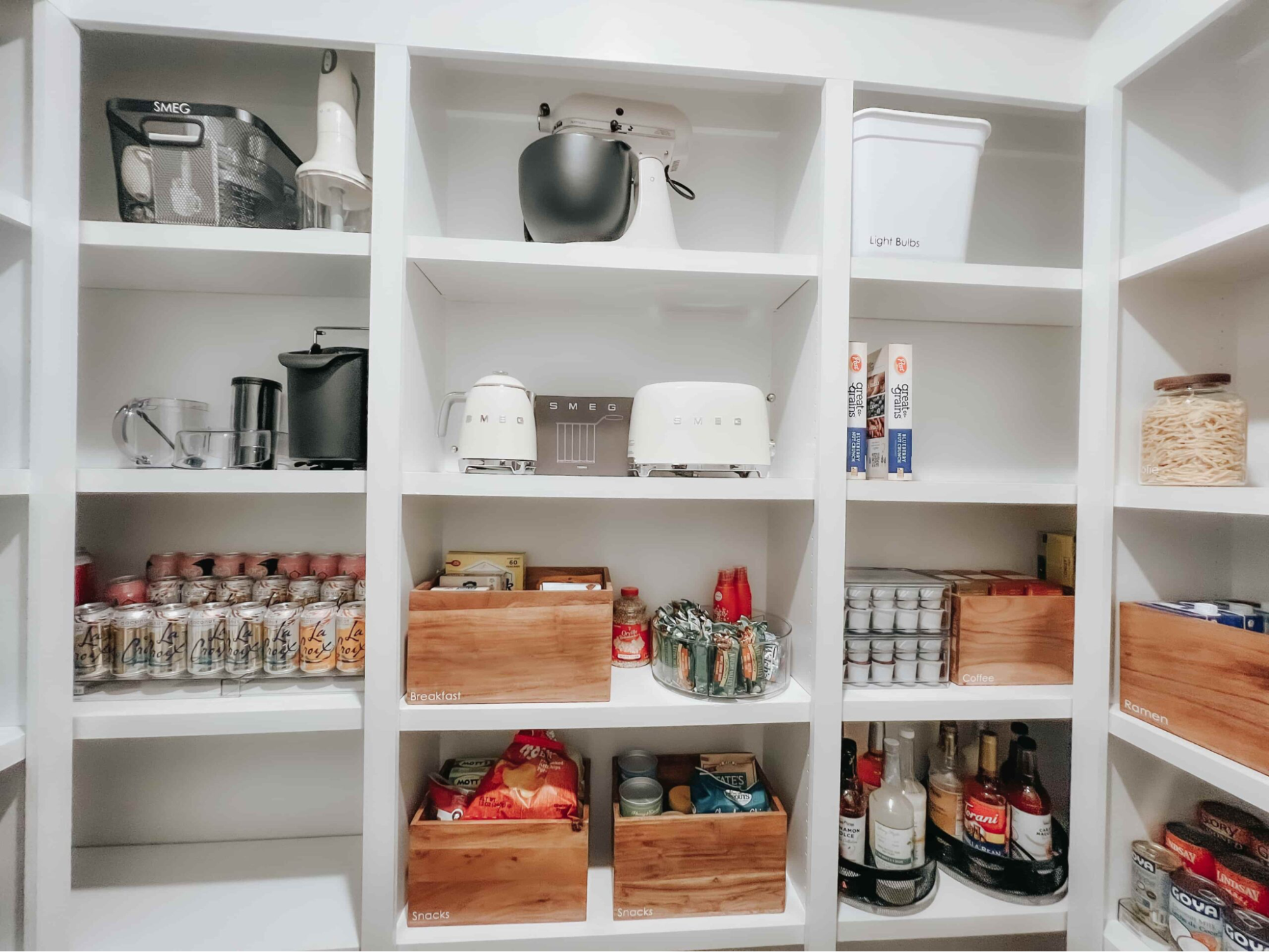
Functionality comes first, but aesthetics still matter.
A thoughtfully organized pantry can complement your kitchen’s overall design while making everyday routines more enjoyable.
When selecting organizing products, consider your pantry’s existing finishes, cabinetry, shelving, and overall style.
For example, woven baskets can introduce warmth and texture, while clear acrylic bins create a clean, modern appearance.
White or neutral storage baskets can help visually simplify a pantry with colorful packaging.
You can also combine different materials to create a more intentional look.
However, avoid purchasing products solely because they look beautiful.
The best pantry organization products should fit your shelves, accommodate your inventory, and support the way your household functions.
Our professional organizing tip: Choose a consistent color palette and limit the number of organizing product styles you use. This creates a cohesive appearance without sacrificing functionality.
10. Build a Pantry Maintenance Routine That Actually Works
Here’s something we tell our clients: Getting organized is one thing. Staying organized requires systems that are realistic for your lifestyle.
Even the most beautifully organized pantry can become cluttered again without regular maintenance.
Fortunately, maintaining your pantry doesn’t have to involve a complete overhaul every month.
Start with a simple routine.
Before grocery shopping, take a few minutes to check what you already have. As you put groceries away, return items to their designated zones and place newer products behind older ones when appropriate.
Every few weeks, straighten containers, discard expired items, and reassess any categories that are becoming overcrowded.
Pay attention to what’s consistently difficult to maintain.
If your children never return snacks to the designated basket, perhaps the basket isn’t accessible enough.
If canned goods are constantly overflowing, you may need to adjust your inventory limits or storage configuration.
A good organizing system should evolve with your household, not force your household to work around it.
What Makes a Pantry Both Functional and Beautiful?
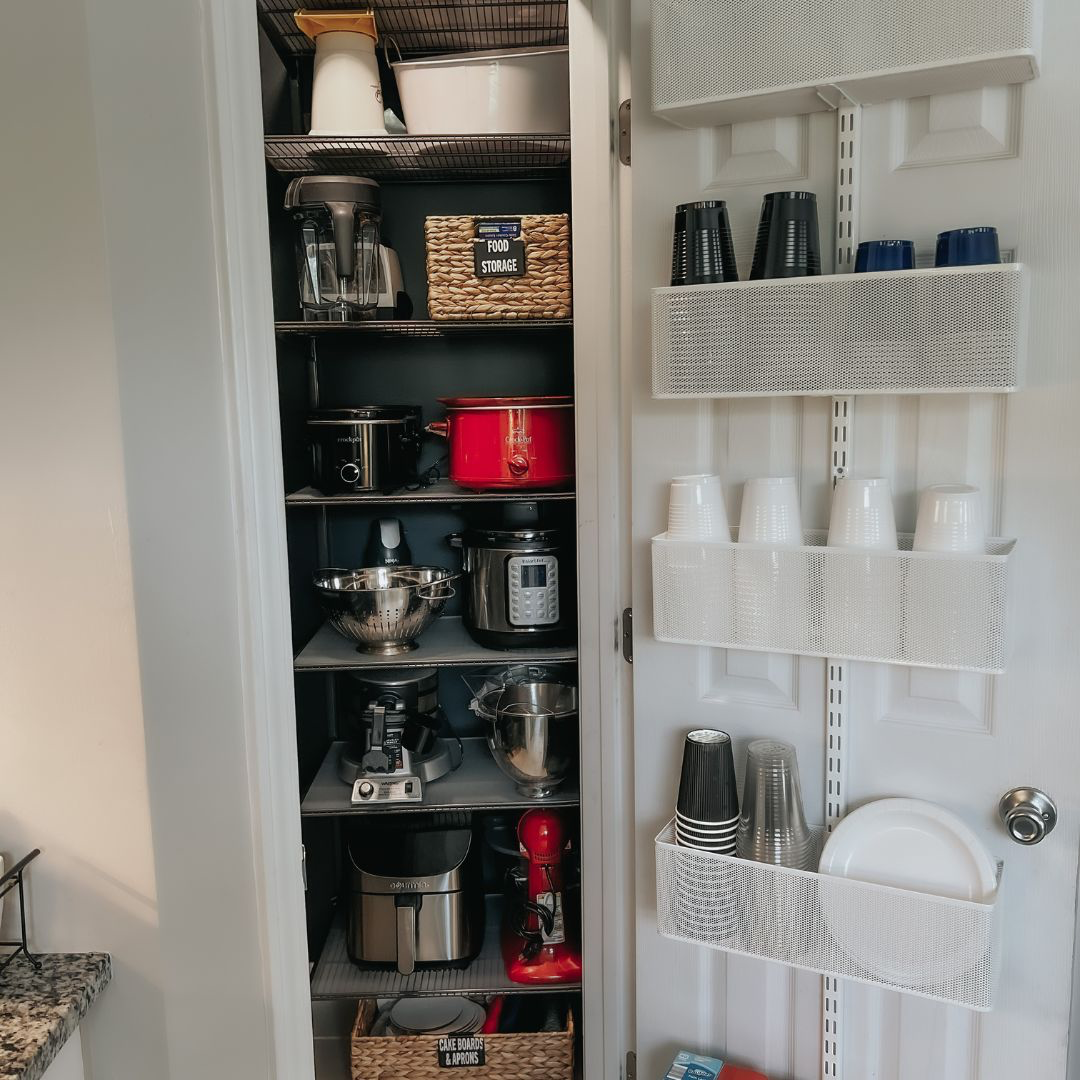
The most successful pantries aren’t necessarily the ones with the most expensive organizing products or perfectly matching containers.
They’re the ones that make sense for the people using them.
At Tidied by K, we believe effective pantry organization comes down to three things: accessibility, visibility, and sustainability.
Accessibility means the items you use most often are easy to reach.
Visibility means you can quickly identify what you have and what you need.
Sustainability means your organizing system is simple enough to maintain through everyday life.
When those three elements work together, you create a pantry that’s not only beautiful but genuinely useful.
And that’s what professional organizing should accomplish.
Ready to Transform Your Pantry? Let Tidied by K Help.
You don’t need a massive walk-in pantry or an unlimited organizing budget to create a space that works beautifully.
Sometimes, a few strategic changes can completely transform how you use your kitchen.
But if you’re ready for a more comprehensive transformation, our team at Tidied by K would love to help.
As a professional organizing company serving Atlanta and surrounding communities, we specialize in creating customized organizing systems that bring together functionality, accessibility, and beautiful design.
From evaluating your inventory and maximizing storage to sourcing organizing products and creating thoughtfully labeled systems, we handle the details so you can enjoy a space that works for your lifestyle.
Ready for a pantry that looks beautiful and makes your everyday life easier? Explore our home organizing services and take the first step toward a more functional home.